May is National Mental Health Awareness Month and the AAO is recognizing members for their efforts in support of others’ mental well-being.
Dr. Donna Panucci has long been concerned about how the cumulative impact of daily workplace stress – even in an orthodontic practice with a positive culture – can take a toll on mental and eventually, physical health.
“I was interested in techniques to help shift the nervous system from the sympathetic to the parasympathetic state, from ‘fight or flight’ to calmness and resilience,” she says. “When I first heard about the HeartMath system, I was skeptical because the techniques seemed much too simple to produce a significant result.
“Then, I looked at the body of research* on heart coherence, or the rhythm of the heart,” she says. “I was interested in heart coherence and its potential to improve emotional and mental well-being.” The HeartMath Institute defines coherence as “a scientifically measurable, synchronized state where breathing, heart rate variability (HRV), and brain rhythms harmonize, fostering emotional stability, mental clarity, and improved physical performance.”
The HeartMath website reports that in 1995, the American Journal of Cardiology published a study that showed “we have the power to shift our heart rhythms (HRV) to send more positive signals throughout the body — balancing our nervous, hormonal, and immune systems.” The HeartMath Institute provides training in quick, specific techniques designed to apply emotions such as appreciation, care, and compassion to shift physiological states toward coherence.
Dr. Panucci began learning HeartMath techniques and found that with consistent practice, the impact on her stress level was profound.
“To make HeartMath techniques effective, it is best to apply them two to four times daily — especially when you are experiencing stress in order to interrupt your stress response,” she says. “A structured, consistent approach is necessary to make it work.”
In orthodontic practice for 30 years serving patients in South Charleston, West Virginia, and Gallipolis, Ohio with her partner Dr. Lindsay Jackfert, Dr. Panucci began considering how she could use her newfound knowledge to help the practice’s team.
“My team is like my family and when I found HeartMath so effective, I wanted to use what I learned to help them thrive, both at work and in their personal lives,” she says. She became certified by the HeartMath Institute as an Activating the Heart of Teams Trainer, learning to teach and train individuals and teams to utilize techniques aligned with positive heart coherence outcomes.
Dr. Panucci then prepared to introduce HeartMath to her practice’s team.
“We started with an overview of the research on heart coherence,” she says. “That was of high interest to my team members, who understand how important research is in orthodontics. They were intrigued and enthused about learning HeartMath techniques.” Dr. Panucci then began incorporating HeartMath exercises into team meetings and eventually, into the team’s annual retreat.
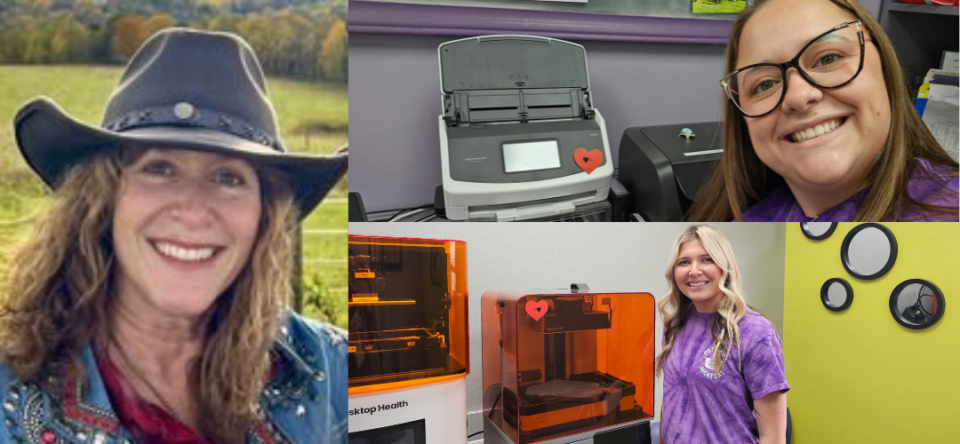
“They really embraced the practice and reported feeling calmer, more energized and less burned out,” she says. “I also reminded them to consistently use the techniques when feeling stressed. Of course, it isn’t easy to pause in the middle of a stressful situation, but if you do so consistently, it will become a habit. We provided reminders to encourage doing so by placing heart graphic magnets at strategic points throughout the office.
“I am thrilled that this approach is helping my team,” adds Dr. Panucci. “Most orthodontists want our teams to be happy and healthy — and of course, I encourage colleagues to think about themselves as well. Don’t wait until you feel like you’re about to hit a wall, or your body breaks after years of stress. Find a technique that supports stress relief and resilience.”
* Research related to HeartMath techniques and heart coherence:
- McCraty, R. & Shaffer, F. (2015). “Heart Rate Variability: New Perspectives on Physiological Mechanisms, Assessment of Self-regulatory Capacity, and Health Risk.” Global Advances in Health and Medicine. — The foundational HRV and coherence reference.
- McCraty, R. (2017). “New Frontiers in Heart Rate Variability and Social Coherence Research: Techniques, Technologies and Implications for Improving Group Dynamics and Outcomes.” Frontiers in Public Health. — Bridges individual and team coherence, directly relevant to office culture.
- Shaffer, F. & Ginsberg, J.P. (2017). “An Overview of Heart Rate Variability Metrics and Norms.” Frontiers in Public Health. — Gives orthodontists the physiological framework to understand what HRV coherence actually measures.
- West, C.P. et al. (2016). “Interventions to prevent and reduce physician burnout.” The Lancet. — Bridges HeartMath to the broader burnout conversation in healthcare, lending mainstream credibility
- HeartMath Institute Research Library at heartmath.org — Over 300 peer-reviewed studies available for direct citation.